
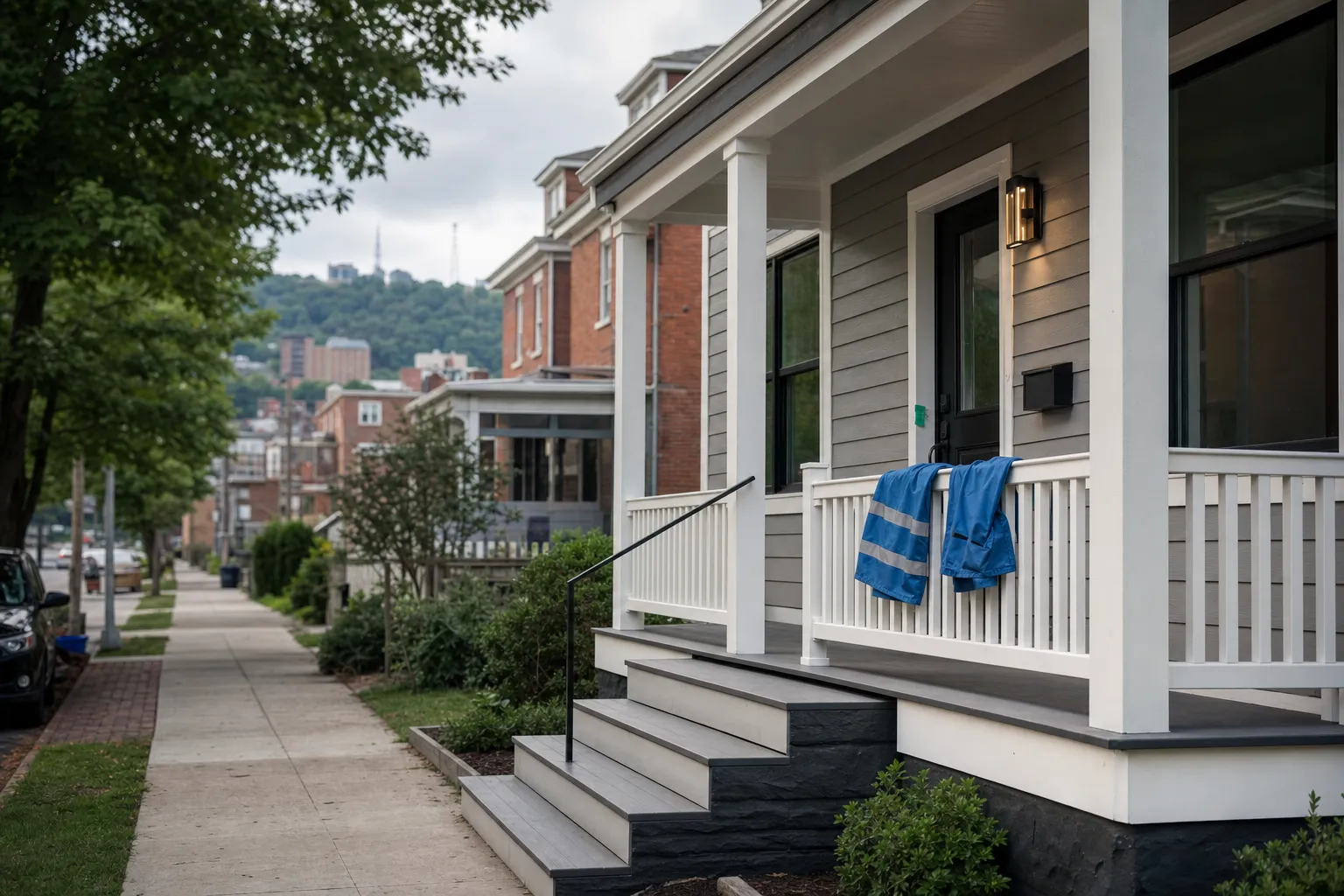
Siding maintenance during installation matters because the choices made on day one determine how well siding performs for years. During installation we check substrates, flashing and fasteners so the siding sheds water, breathes where it needs to, and can be serviced without tearing off finished work.
What we mean by siding maintenance during installation
Short answer: maintenance during installation is the set of actions and decisions we take so future upkeep is easier and less costly, and so the siding meets manufacturer care requirements.
That includes material selection, correct flashing, drainage plane details, fastener placement and leaving access for inspections and repairs. Those items affect how often a homeowner needs to clean, touch up trim, or replace boards or panels.
Why this matters for South Oakland and Pittsburgh homes
Pittsburgh area weather, with its freeze thaw cycles and heavy rain in spring and fall, exposes siding systems to moisture stress. If water is allowed behind cladding, it can lead to rot, degraded insulation performance and higher repair bills. We factor local rainfall patterns and common foundation and roof details we see across South Oakland into installation choices.
We are Quality Construction Group, a Pittsburgh general contractor with more than 30 years of local experience. We coordinate siding work with roof, window and trim trades so water management is continuous from the roof to grade.
Key concepts to understand
- Drainage plane and flashing. A continuous path for water to exit the wall assembly keeps moisture from sitting against sheathing.
- Substrate preparation. Proper sheathing, house wrap and fastener layout support a secure finish and reduce movement that causes gaps and failures.
- Material specific care. Vinyl, fiber cement, engineered wood and wood all have different cleaning and painting needs and different tolerance for moisture and impact.
- Fasteners and trim details. Correct fastener type and placement, plus trim seals at corners and penetrations, prevent leaks and loose siding.
- Warranty registration and documentation. Many manufacturers require specific installation and maintenance steps to keep the warranty valid.
What we do during siding installation to reduce future maintenance
We do not just attach panels. We work through a checklist to align installation choices with long term maintenance needs. This is part of how we manage projects from design through completion.
Installation for lower maintenance
- Confirm substrate and framing are sound before cladding goes on.
- Install continuous flashing at rooflines, windows and decks to shed water.
- Use manufacturer recommended fasteners and follow spacing guidelines.
- Coordinate with window replacement or roof repair when needed, to avoid leaving vulnerable transitions.
- Provide written care guidance and warranty documents to the homeowner at hand over.
How maintenance needs differ by siding material
| Material | Typical maintenance | What to watch for |
|---|---|---|
| Vinyl | Periodic cleaning with mild detergent, inspect for loose panels | Warping after heat exposure, cracked trim at corners |
| Fiber cement | Occasional repainting or caulking, check joints for sealant failure | Paint failure at flashing transitions, chipped edges from impact |
| Wood | Regular painting or staining, sealing of cut ends | Rot at penetrations, insect damage, split boards |
| Engineered wood | Follow manufacturer care, keep vents and overhangs clear | Edge swelling where water pools, delamination if moisture barrier compromised |
Common questions homeowners ask
How often should siding be inspected? A visual inspection once a year is a good baseline, with a closer look after major storms. We check seals, flashing and kickout details where walls meet roofs.
Will maintenance void the warranty? Often the opposite is true. Many manufacturers require routine care and proper installation to keep warranty coverage. We follow manufacturer guidance and provide the documentation you need.
Can maintenance be postponed until after winter? Short answer, it depends. Small cosmetic cleaning can wait, but repairs to flashing, trim or loose fasteners should not wait because winter freeze and thaw can worsen water intrusion.
Pro tip: Keep a small folder with installation photos, manufacturer cut sheets and the final inspection notes. That file makes future maintenance and warranty claims far easier.
When to involve a general contractor
Maintenance that requires access behind the cladding, replacement of flashings, or changes to trim and roof connections should be handled by a contractor. We coordinate trades so the work is done safely and so warranties remain intact. For siding installation projects in Pittsburgh and nearby neighborhoods we manage the whole sequence from tear off to finish.
Learn more about our approach to siding installation on our Siding Installation service page, and read about moisture control principles on our Moisture Management topic page.
Related services and who else you might need
Because siding performance depends on the entire building envelope, siding work is often coordinated with other services. Common pairings include roof repair, window replacement and minor carpentry. We schedule those trades to avoid leaving exposed transitions that increase maintenance needs.
- Roof Repair, to align roof flashing and kickouts with new siding.
- Window Replacement, to ensure window flashings and siding trim integrate correctly.
- Handyman Services, for ongoing small repairs and cleaning tasks.
Related locations we serve
We install and maintain siding across Pittsburgh and nearby communities. If you are in South Oakland, we factor local rooflines and foundation heights that are common in the neighborhood when planning maintenance. For project planning, see our Pittsburgh location page for localized guidance.
Helpful resources and references
For background on the general contractor role we reference the general contractor summary on Wikipedia. For material specific care, see manufacturer guidance such as James Hardie care and maintenance recommendations. These resources describe manufacturer requirements that affect long term maintenance and warranty coverage.
Key takeaway
Maintenance planning during siding installation is not optional. The right installation details reduce future repairs, preserve warranty coverage and keep long term costs down. We bring local experience to those decisions for South Oakland and Pittsburgh homes.
Frequently asked questions
What should I expect in hand over documentation after installation?
Expect manufacturer literature, a list of materials and fastener types used, photos of critical flashing details and basic care instructions. That documentation helps with future maintenance and any warranty needs.
How does siding installation affect paint or finish life?
Proper flashing and ventilation reduce moisture contact with coating systems. For painted siding like fiber cement or wood, we specify trim and overhang details that minimize direct water exposure to painted surfaces.
Can we do seasonal cleaning ourselves?
Yes, light cleaning with a soft brush and mild detergent is appropriate for many materials. We avoid giving detailed step by step instructions that would replace professional inspections, but we can provide a care sheet that lists safe cleaning approaches for your specific material.
Find our local reviews and more details
Check Quality Construction Group's Google Business Profile to read customer reviews and get directions. For more on how we handle siding work, see our Siding Installation service page.